Why A&Rs don't listen to your music
Most demos are closed before the first chorus, and the song is rarely the reason. A&Rs skip an unfinished profile, a link that won't play in full quality, and a song nobody can say who owns.
You sent the demo. Nothing came back. It is easy to decide the song wasn't good enough, but most demos never get that far. An A&R decides whether to press play before the music starts.
An A&R's job is to find artists a label can put money behind. Every email they open costs them time they could spend on the artists they already have, so they look for a fast reason to say no. A profile that looks abandoned. A link that wants a login. A song nobody can say who owns. Each one closes the tab, and none of them is about your music.
These are the reasons we see most, and what to fix before your next pitch.
1. Your profile doesn't look finished
Before an A&R plays your track, they click your name. They want to know if there is an artist behind the song: someone who releases, plays shows and will still be doing it next year.
What they often find instead:
- No photo, or one from three projects ago
- An empty bio, or 600 words about your childhood
- A link page full of dead links
- A Spotify profile with no release since 2023
- Socials under a different artist name
- No shows and no press, nothing that says the project is moving
None of this takes a budget. It takes one page that is current: a photo, two lines on who you are and what you sound like, your latest release, your next show, and links that work.
In Aden, your team profile is that page, at aden.space/@yourname. Paste your Linktree or website into Import or paste links on your Links page and Aden files every link where it belongs: socials on your profile, shows on your calendar, songs in your catalogue, press in your posts. Your press kit sits at /@yourname/epk with your logos, banner, colours and links. Have your own domain? Point it at the profile.
2. They can't hear it properly
An A&R listens on a phone between meetings, in the car, on studio monitors at the end of the day. Your link has to play in one tap, anywhere, at the quality you mastered it at.
The links that get skipped:
- An MP3 attachment at 128 kbps, or a 60 MB WAV that clogs their inbox
- A private SoundCloud link that asks them to log in
- A WeTransfer that expired before they got to it
- A Dropbox folder that downloads as a zip
- A YouTube upload with an ad before your intro
Every extra step is a chance to move on. A compressed file also takes the edge off your low end and your vocal, so even when they do listen, they judge a copy of the master you signed off on.

In Aden, the share link on a track plays the file you uploaded, not a compressed copy. WAV, FLAC and AIFF stay lossless. It opens in the browser with no account to make, and you decide whether the link allows downloads. A Details tab answers the questions an A&R asks next, like BPM, key and ISRC, so they don't have to email you to find out. Worried about leaks? Add an inaudible watermark, and a leaked file dropped back into Aden tells you which link it came from.
3. The paperwork isn't there
Say the A&R loves it. The next person to hear about your song works in business affairs, and they have questions:
- Who wrote it, and what are the splits?
- What is each writer's IPI number and PRO?
- Who owns the master, and is there a producer agreement?
- Are the samples cleared?
- Does it have an ISRC?
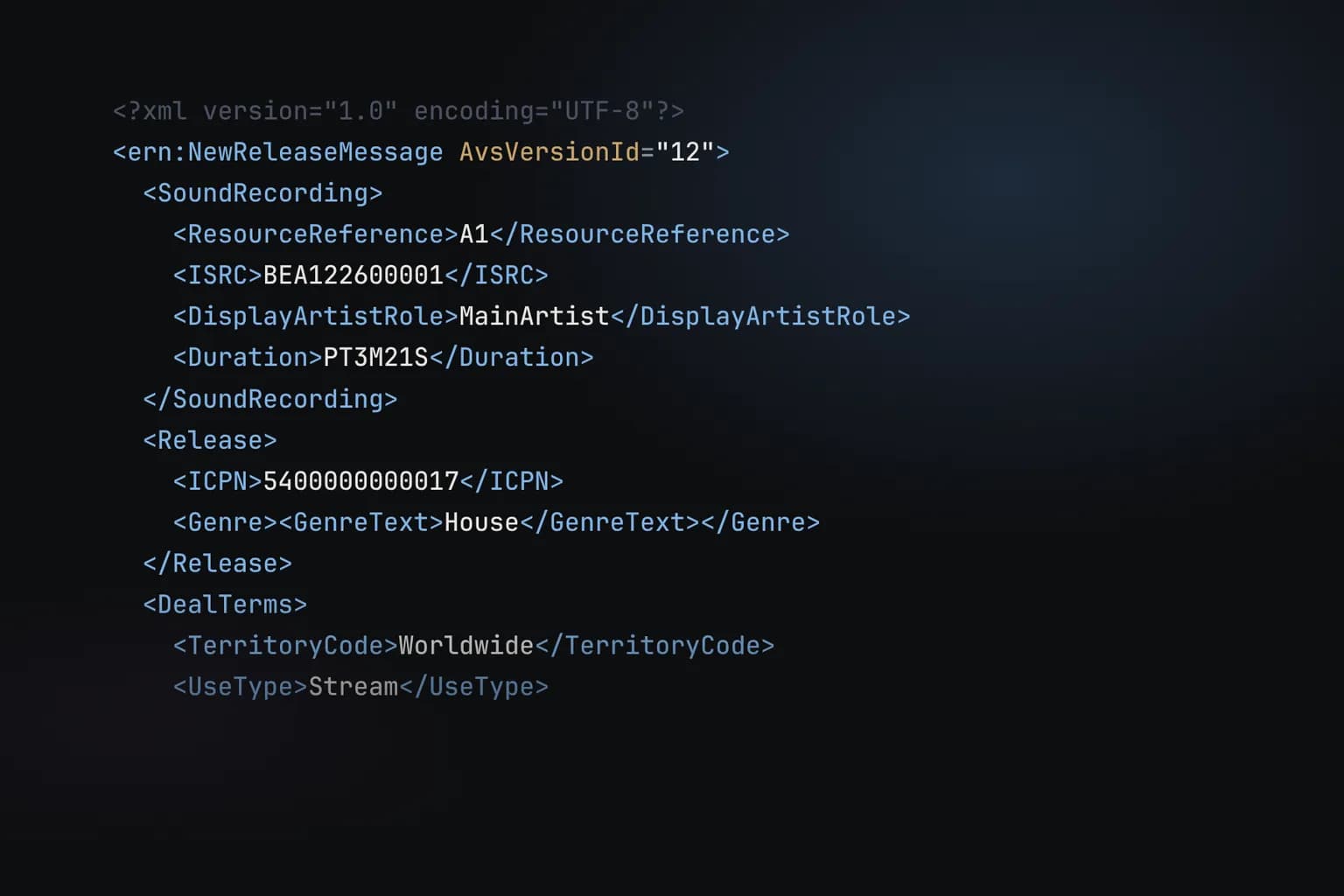
If the answer is "let me ask my co-writer", the deal slows down. If nobody knows, it often dies there. A song with unclear ownership is a risk, and labels pass on risk however good the chorus is.
Settle splits on the day you write the song, while everyone still agrees. Write down every writer's name, role, share, IPI number and PRO. If those codes are new to you, read ISRC, ISWC and IPI explained and master rights vs publishing rights.
In Aden, every track keeps its collaborators with their roles, IPI, PRO and splits. A split can differ per revenue type, so master, publishing and sync each get their own percentage. Contracts, split sheets, producer agreements and sample clearances sit in the track's Files, on the whole track or on the version they belong to. When a label asks, you send a timed link instead of digging through old email threads.
4. The email reads like a mass mail
A&Rs can tell a blast from a pitch in the preview line. "Dear Sir/Madam." Another label's name left in from the last send. Thirty addresses in the To field. Five links and three attachments, and a paragraph about your journey before a word about the song.
A pitch that gets read is short and specific:
- The A&R's name, and why this song fits their label
- One line about the song: genre, tempo, who it sits next to
- Whether it's finished and ready to release
- One private link
- One ask
5. It's the wrong label
A label that signs hip-hop won't sign your melodic techno, however good it is. Sending it anyway tells the A&R you never listened to them. Play their last ten releases before you pitch. If your track wouldn't fit in that run, skip them and save both of you the time.
6. You never follow up, or you follow up every day
Inboxes bury things. One polite nudge after a week or two is normal, especially with news: a release date, a show, a playlist add. A message every three days is not. And if you can't see whether they even opened the first email, every follow-up is a guess.
Pitch every label, and make each email personal
The usual way to pitch a lot of labels is a BCC list, which is reason 4. The other way is forty emails by hand, which takes a week. Aden does the part in between.
Open a track, choose Send a pitch and add the labels. Aden drafts the email and fills in, per label, the A&R's name, the label's name, the song title and a private link made for that label. The line about the music is yours to write: the draft has gaps in [brackets], and Aden won't send while one is still empty. Prefer your own words? Pick a pitch from your sent mail and Aden turns it into a template. Send them all at once, or switch to One by one and adjust each email before it goes.
Each pitch goes out from your own Gmail or Outlook, so it arrives as a message from you, not from a newsletter tool. Because every label has its own link, the Pitches widget on your dashboard shows who opened your email and who pressed play. When a label replies, Aden reads the reply and sets the status for you: in consideration, accepted or rejected. A label that stays quiet lands on your follow-up list after 14 days.
Emailed A&Rs before? Find A&R contacts on your Leads page searches your connected Gmail for demo threads and adds the people it finds as contacts, grouped by label.
The full walkthrough is in the guide How to pitch your music to A&Rs.
Before you hit send
- Your profile has a current photo, a two-line bio, your latest release and links that work.
- Your link plays in one tap, in full quality, without a login.
- You know every writer's split, IPI and PRO, who owns the master, and the ISRC.
- Your email uses the A&R's name, says why the song fits, and has one link and one ask.
- The label's last ten releases sound like they belong next to your track.
- You have a date for one follow-up, and something new to say in it.
FAQ
How long does an A&R listen to a demo?
Assume you have the first 30 seconds. If the best part of your song arrives at 1:30, send an edit that gets there sooner, or tell them where to skip to.
Should I attach an MP3 or WAV to a demo email?
No. Attachments fill inboxes and often land in spam. Send one private link that plays in full quality in the browser, and send the WAV when they ask for it.
Do I need splits and IPI numbers before I pitch?
You need them before a label can sign anything, so have them ready. An A&R who likes a song passes it to business affairs, and missing splits are where deals stall.
Can I send the same pitch to many labels?
Yes, if each email goes to one person, uses their name and says why the song fits their label. One email per label, never a BCC list.
When should I follow up on a demo?
Once, one to two weeks after you sent it, ideally with news. If a second nudge gets no answer either, move on to the next label.
Are pitches from Aden sent from an Aden address?
No. Aden sends each pitch from the Gmail or Outlook account you connected, so it arrives from you and replies come back to your inbox.
Less admin. More music.